Explore Antarctica Data with Open Resources: Dive into the Antarctica Datacube Hackathon Materials
Explore Antarctica Data with Open Resources: Dive into the Antarctica Datacube Hackathon Materials
Published: 02.07.2026
The Antarctica Datacube Hackathon is underway this week, and while participation in the live event is reserved for the ESA Polar Science Cluster community, the open datasets, tutorials, and notebooks are freely available to anyone interested in polar science. These materials offer a unique opportunity to engage with cutting-edge polar science data, tools and workflows—all designed to be accessible, reproducible, and community-driven. So, whether you’re a researcher, student, or data enthusiast, these resources are your gateway to exploring Antarctica’s ice shelves, grounding lines, and more.
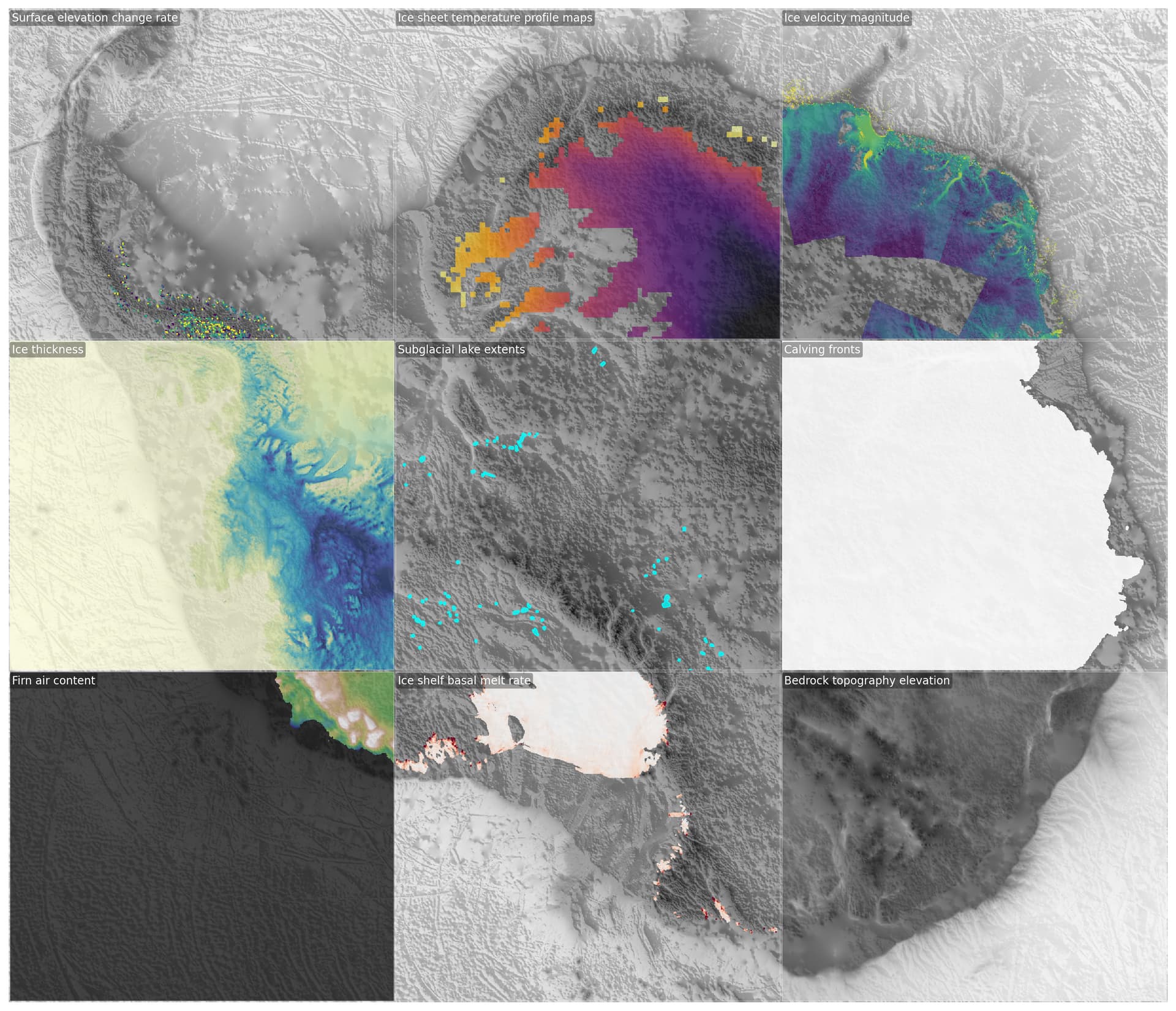
The Antarctica Datacube Hackathon, which is led by EarthCODE's Lampata, is the first step for the EarthCODE team hard at work preparing for an exciting milestone—the EarthCODE Hackathon 2026, which will take place from 30 November – 4 December 2026. To lay the groundwork, EarthCODE is hosting online hackathons for the ESA Polar, Ocean, and Carbon Science Clusters. This online Antarctica Datacube Hackathon is an opportunity for scientists to explore scientific data available in the Open Science Catalog, experiment with new tools and data, and collaborate.
What’s Available Now?
The Antarctica Datacube Hackathon materials are designed to be self-contained, reproducible, and adaptable, so you can dive in regardless of your background. Here’s what you can access today:
Antarctica Data Collections
Explore the ESA Antarctica Datacube, a streamlined framework for analysing Antarctic datasets, and other datasets, curated for research and analysis. These datasets are hosted on the EarthCODE platform and are ready for you to use:
- AI4AIS Larsen C cube – Ice shelf combined variables
- ALBATROS tidal elevation – Altimetry tide elevation prediction
- Ice shelf basal melt – Ice shelf melt rates
- BedMachine Antarctica – Bed, surface, thickness, mask
- Calving fronts – Time-evolving coastlines/fronts
- CS+AO sea ice thickness – Southern Ocean sea ice
- Grounding lines – Antarctic grounding-line observations
- Ice temperature profiles – Englacial temperature
- Ice velocity – Antarctic surface velocity
- Surface elevation change – Grounded ice surface elevation
- SOFRESH sea surface salinity – Southern Ocean salinity
- Subglacial lakes – Active lake boundaries
- Supraglacial lakes – Surface hydrology features
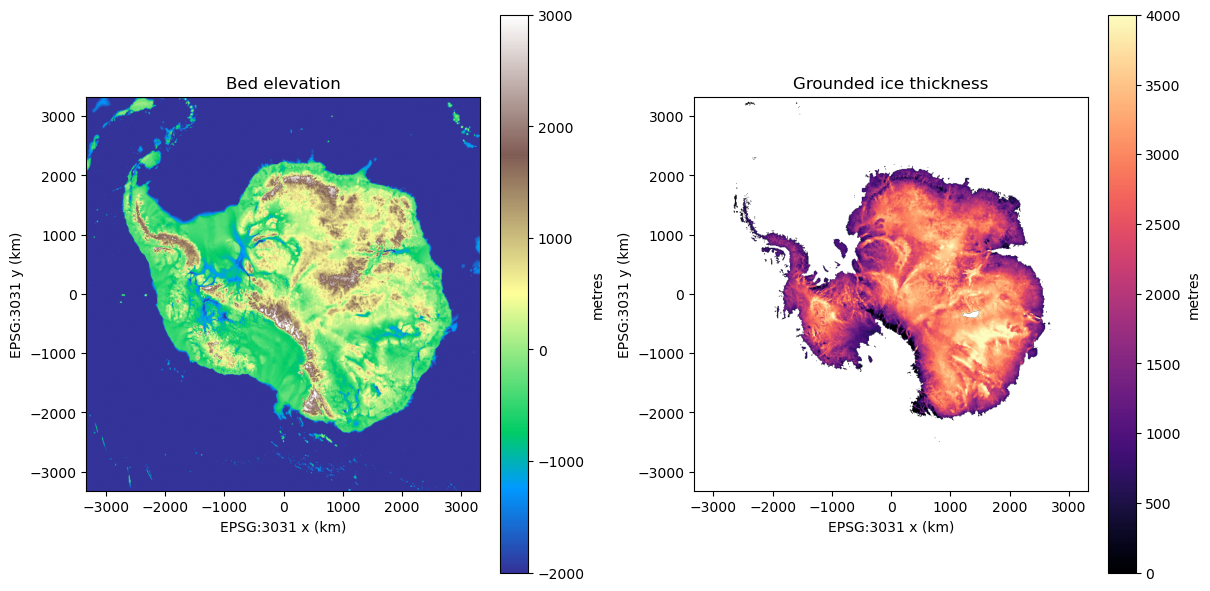
Each dataset includes a Jupyter notebook—an interactive document that combines code, visualizations, and step-by-step instructions—to help you explore the data directly. The ESA Antarctica Datacube provides a dedicated environment to facilitate easier analysis of and access to Antarctic science data.
To find out more browse the available Antarctica datasets or view the Antarctica InSync data cube Dashboard.
Tutorials and Notebooks
Step-by-step guides and Jupyter notebooks are available to help you get started with the Antarctica datasets and the EarthCODE Workspace. Everything is designed to run locally, so you can experiment at your own pace. As well as the support provided for the Antarctica Datacube Hackathon, there is a whole wealth of information and support available for getting to grips with EarthCODE.
Access the Antarctica Datacube Hackathon Tutorials and Notebooks and the EarthCODE Documentation.
Why This Matters
The EarthCODE team is supporting the Polar Science Cluster in working to break down barriers in polar research by providing:
- Open datasets: Accessible and shareable resources for the community.
- Reproducible workflows: Tools and notebooks designed to be self-contained and adaptable.
- Collaborative opportunities: A sneak peek into the processes that will shape the EarthCODE Hackathon 2026.
The Antarctica Datacube Hackathon is just the beginning. The insights and feedback gathered will help refine the main event, ensuring it delivers maximum value for participants.
What's Next?
EarthCODE will also run online Hackathons for the ESA Ocean and Carbon Science Clusters and sharing information on the datasets and resources being made available as part of these events. However, we are already looking ahead to the EarthCODE Hackathon 2026, an in-person event that will bring together researchers, data scientists, and open data enthusiasts. Hosted at ESA ESRIN, Italy, it will run from 30 November – 4 December 2026. Stay tuned for updates as the community finalises the details.
Learn more about the EarthCODE Hackathon 2026
We’ll share a recap and key takeaways from the Antarctica Datacube Hackathon in the coming days. Until then, explore the resources, experiment with the tools, and get ready for what’s to come!
EarthCODE: Empowering science through open data and collaboration.